
Beyond Recycling: Powering a Circular Future in Plastics
At Hoffer Plastics, sustainability is built into our DNA. For more than 70 years, we’ve treated efficiency, innovation and environmental responsibility as the foundation of how we shape ideas into products and progress into impact. Every initiative, from power generation to water and energy reduction to circular material design, advances a single goal: creating lasting value with less impact.
The result: less than 1% of materials sent to landfill, a 50% reduction in water usage and a 30% cut in carbon emissions since 2022 while maintaining world-class quality and throughput.
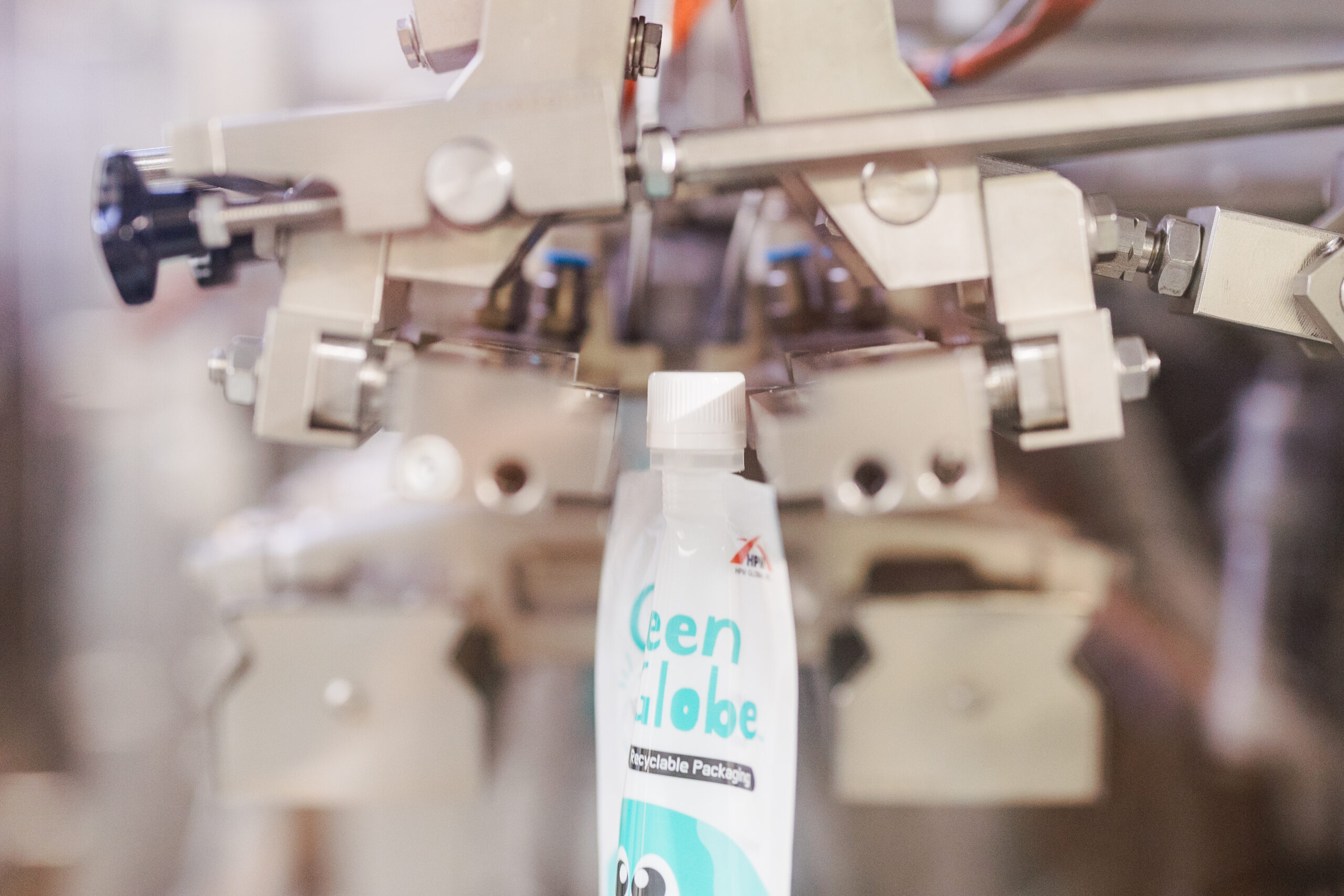
As much as 20% of a package’s plastic weight comes from its cap and spout. These components often determine whether packaging is truly recyclable, and that’s exactly where Hoffer makes a difference.
Introduction
Why Sustainability Matters in Injection Molding
Across the plastics industry, sustainability is moving from statements to measurable action. Brands today expect partners who can help them reduce emissions, energy use and waste without compromising quality or performance. Regulations, consumer expectations and corporate ESG commitments have made verified impact a core requirement for manufacturers. At Hoffer, we see this not as a challenge but as an opportunity to lead by example and transform how plastics manufacturing supports a cleaner, more efficient future.
How Hoffer Leads the Change
Our Illinois campus operates an on-site co-generation power plant installed in 1991 that supports both our operations and the regional grid. Our internal recycling program, launched in 2007, diverts more than 350,000 pounds of plastic from landfills each year and earned Hoffer Plastics the Illinois Governor’s Sustainability Award.
In 2025, Hoffer Plastics received the VIA Spark Award for Social Responsibility recognizing our long-term commitment to environmental stewardship and community engagement.
Today we’re advancing toward carbon neutrality by 2035 and ISO 14001 environmental management certification in 2026, supported by a dedicated environmental and sustainability specialist and company-wide commitment to continuous improvement.
Our Approach: Practical Circularity
We believe sustainability and manufacturability go hand in hand. Our approach connects design, materials, process efficiency and data transparency to drive measurable improvement.
“Circularity isn’t achieved in isolation,” says Jim Stoffel, VP of Quality Excellence. “It’s a supply chain effort. We’re collaborating across partners to design PE and PP systems that are recyclable, safe and high-performing.”
Sustainable by Design
Designing and Manufacturing for Recyclability, Efficiency and Waste Reduction
Carbon Emissions Reduction
- Hoffer Plastics is taking bold, measurable action within our company, community and the plastics industry to reduce emissions and build a cleaner future. Our journey toward carbon neutrality is fueled by passion, precision and accountability.
- We developed a custom carbon calculator to compile years of data and integrates information from suppliers and logistics partners to capture emissions across our full value stream. This comprehensive view helps us target the most effective initiatives to reduce energy use, improve efficiency and advance material recovery.
- We are committed to reducing total emissions by 5% each year and achieving carbon neutrality within the next decade. Today, 40% of our electricity already comes from renewable energy, reflecting our dedication to cleaner power and more resilient operations.
Materials & Circularity
Hoffer primarily molds polypropylene (PP) and polyethylene (PE) – lightweight, recyclable resins that align with flexible packaging sustainability goals.
Our materials strategy is built on choice, performance and circularity:
Energy, Water & Utilities
Key Environmental Metrics
| Initiative | Impact | Equivalent Environmental Benefit |
|---|---|---|
| Initiative Water usage reduction | Impact 50% decrease through closed-loop filtration (latest annual data, to be updated when 2025 results are available) | Equivalent Environmental Benefit Enough water saved to fill 2 Olympic-size pools annually |
| Initiative Carbon emission reduction | Impact 35% between 2022 and 2025 continued to trend down over five latest consecutive quarters | Equivalent Environmental Benefit Equivalent to removing 10,408 passenger vehicles from the road for a year |
| Initiative Annual landfill diversion | Impact 350,000+ lbs of plastic waste | Equivalent Environmental Benefit Enough plastic to manufacture over 25 million closures |
| Initiative Co-generation electricity savings |
Impact
For 2024: saved 1,300,425 lbs/CO2. For 2025: saved 1,837,382 lbs/CO2. |
Equivalent Environmental Benefit CO₂ reduction equivalencies to be added once annual data is finalized |
These savings don’t stop at Hoffer’s doors. Lower energy use and higher material efficiency directly reduce our customers’ product footprints, helping them meet sustainability goals and strengthen their own ESG performance.
Tooling Sustainability
At Hoffer Plastics, extraordinary craftsmanship drives lasting sustainability. Our 27 in-house toolmakers form a dedicated team whose precision, expertise and skill set new standards for mold performance across the industry. Their work goes far beyond maintenance. It’s about continuously elevating and perfecting every mold to deliver exceptional longevity, accuracy and consistency.
Through methodical care, innovation and decades of expertise, our team achieves millions of additional molding cycles per tool, dramatically reducing the need for new mold investment, machining and energy. Each mold under their care runs cleaner, faster and longer, directly advancing our mission to manufacture more efficiently and sustainably. This culture of craftsmanship doesn’t just maintain performance, it defines it.
Energy Savings from Co-Generation
Hoffer Plastics’ on-site co-generation plant, first installed in 1991, is a cornerstone of our sustainability program. Operating year-round, it provides reliable, efficient power for our entire campus while supplying excess electricity back to the local grid every month.
This system not only offsets a significant portion of Hoffer’s own energy needs but also contributes to the stability and resilience of the regional power network. By generating clean, efficient energy on-site, Hoffer reduces dependence on external sources, lowers greenhouse gas emissions and helps support the energy demands of our surrounding community.
In 2024, by using co-generation technology, we reduced electricity-related emissions by approximately 1,300,425 pounds of CO₂.
What You Can Expect with Hoffer Plastics
Partnering with Hoffer Plastics means building products and programs around measurable, lasting sustainability.
- Collaborative Design: Early engagement through Design for Manufacturability (DFM) and Design for Recyclability (DFR) to simplify parts, reduce mass and improve recyclability.
- Material Expertise: Guidance on mono-material, PCR, and bio-based options to balance performance, cost and sustainability goals.
- Proven Efficiency: Industry-leading results – less than 1% material waste, 50% less water use, and ongoing reductions in carbon and energy consumption.
- Smart Manufacturing: Automated systems, SCADA monitoring and co-generation power that make every process cleaner, more efficient and more consistent.
- Craftsmanship and Care: In-house master toolmakers extend mold life, optimize performance and reduce environmental impact through precision maintenance and innovation.
- Transparent Metrics: Clear data on carbon footprint, energy savings and resource efficiency to help customers meet internal and regulatory sustainability reporting goals.
Every partnership starts with a shared commitment: transforming smart engineering into tangible environmental and performance gains.
FAQs: Sustainable Injection Molding
Sustainability starts with efficient design, responsible resin selection and energy-smart production. Hoffer integrates recycled and bio-based materials, real-time process monitoring and high-efficiency presses to minimize waste and impact.
Yes. When resins and additives are engineered correctly, recycled (PCR) and bio-based materials perform like virgin grades. Hoffer validates every material for strength, consistency and compliance before production.
Energy savings, closed-loop material reuse and process efficiency deliver the largest impact. Hoffer’s regrind systems, energy-efficient equipment and renewable power all lower carbon and operating costs.
Hoffer uses a custom carbon calculator and SCADA data to track energy and material use across operations. We’re replacing older presses with energy-efficient electric models, sourcing 40% renewable electricity, and running an on-site co-generation plant that powers our facility and supports the grid. Combined with water recycling and regrind reuse, these efforts drive a 5% annual emissions reduction toward carbon neutrality within a decade.
Smart automation turns sustainability goals into measurable gains. SCADA systems and autonomous mobile robots (AMRs) streamline production flow, cut idle energy use and reduce manual handling. Real-time monitoring improves consistency and lowers emissions, helping every molded part be produced with less energy and waste.
Ready to Build a Lower-Environmental Impact Program?
Let’s explore ways to reduce material use, energy consumption and waste in your next project. Our team will create a practical plan with DFM/DFR guidance, tooling optimization and verified data to help you reach your sustainability goals with confidence.
"*" indicates required fields