
Tooling for Injection Molding
Precision tooling powers speed, quality and scale.
At Hoffer Plastics, tooling is the backbone of every successful injection molding program. Our tooling specialists partner with engineering and trusted toolmakers to ensure every mold is optimized for reliable processing, validated for production and maintained for long-term performance. Through disciplined maintenance and lifecycle management, we drive production efficiency, extend tool life and ensure consistent part quality, delivering molds that perform well beyond typical industry lifecycles to reduce total cost of ownership.
Tooling for Injection Molding: An Introduction
Why Tooling Is the Backbone of Injection Molding
A mold is more than a block of steel; it’s the blueprint for repeatability. Robust tooling controls how plastic flows, cools and ejects, directly influencing part quality, cycle time and manufacturing efficiency.
With Hoffer’s tooling expertise and integrated injection molding approach, customers gain faster startup, smoother validation and reliable performance from the first shot through ongoing production.
The Link Between Tooling, Efficiency and Product Quality
Well-engineered tooling delivers measurable advantages:
- Consistent dimensions and appearance through tight tolerances, precision maintenance and controlled surface finishes that minimize flash and sink.
- Shorter cycle times achieved with optimized cooling, gating and mold actions to enhance throughput.
- Higher uptime and reliability supported by durable steels, proactive mold maintenance and rapid repair.
- Lower scrap and cost per part through stable processing windows and repeatable performance over millions of cycles.
Understanding Tooling in Manufacturing
What is Tooling?
Tooling encompasses injection molds, fixtures, gauges and robotic end-of-arm tooling (EOAT) used to produce and verify plastic parts. In molding, the mold cavity defines geometry while gating, venting and cooling systems enable efficient, repeatable processing.
Collaborative Approach to Tooling Success
Hoffer’s in-house tooling and manufacturing teams work together through Design for Manufacturability (DFM), build, validation and startup to support manufacturability, optimize mold performance and ensure reliable, consistent results. We collaborate closely with a trusted network of mold builders to ensure every tool entering production meets the highest standards.
Tooling for Plastic Injection Molding
How Tooling Integrates With Molding Systems
In Hoffer’s injection molding operations, machines plasticize resin and inject it into the mold under pressure. The tool manages flow, pack and hold, cooling and ejection, translating machine capability into consistent, repeatable part production.
Materials Used in Tooling
- Steel molds: P20, H13, 420 SS and S7 for wear resistance, dimensional stability and long production life.
- Aluminum molds: Used for prototypes, bridge tooling and rapid iterations where speed and cost are priorities.
- Components: Hot runners, valve gates, slides, lifters, inserts, wear plates and conformal-cooled cores enhance mold performance and cycle efficiency.
Types of Tooling for Injection Molding Machine Tooling
Robot Tooling
Use of Robotic Automation in Injection Molding
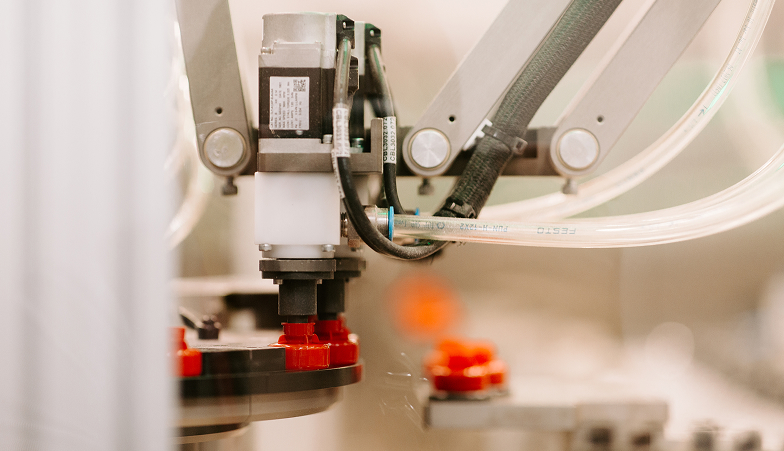
End-of-arm tooling (EOAT) extracts parts, runners or sprues, presents parts to vision systems and stages components for secondary operations.
Benefits for Efficiency and Accuracy
- Faster cycle times and fewer handling defects.
- Stable part orientation for secondary operations.
- Inline inspection and traceability at scale.
Custom Tooling
Advantages for Complex Parts
Custom tooling for complex parts allows for specialized and complex features such as multi-cavity layouts, family tools, collapsible cores and unscrewing mechanisms. These designs enable undercuts, threaded features and multi-component assemblies while maintaining dimensional accuracy, reducing scrap and improving manufacturing efficiency.
Designing Molds for Specialized Industries
For markets like packaging and personal care, custom tooling is designed around precise handling, optimized surface finishes, material compatibility and validated molding processes. This ensures every part meets functional, aesthetic and regulatory requirements to exceed your expectations.
Industrial Tooling
Large-Scale Applications
Automotive, industrial and specialty packaging programs demand tooling that prioritizes longevity, maintainability and repeatable performance for high-volume production. Hoffer manages every stage – from DFM through validation – to ensure consistent uptime, dimensional accuracy and cost-efficient production over millions of cycles.
Industrial Tooling Equipment and Standards
Every mold is specified for performance and durability, featuring options that may include hot runners with precise thermal balance, hardened wear surfaces, robust alignment systems and documentation supporting PPAP, APQP or equivalent validation requirements. This ensures compliance and traceability across complex production environments.
Specialized Tooling Options
Rapid Tooling for Injection Molding
What Rapid Tooling is and When it’s Used
Rapid tooling uses accelerated methods and materials (often aluminum or hybrid builds) to quickly create tools for prototypes, bridge tooling and design verification. At Hoffer, our engineers discuss the best option for your program based on your volume, resin and performance results.
Benefits for Prototyping and Short-Run Production
- Quick iterations for Design for Manufacturability (DFM) and cosmetic tuning.
- Identifies design issues early to prevent costly redesigns and delays.
- Allows the use of production-grade resins to validate performance under true conditions.
- Lower initial investment before committing to full production tooling.
Soft Tooling for Injection Molding
Difference Between Soft and Hard Tooling
Soft tooling (typically aluminum or pre-hardened steels) supports lower volumes and faster changes. Hard tooling (fully hardened steels) targets long life and high cavitation.
Advantages and Limitations of Soft Tooling
Advantages:
- Faster build.
- Lower cost.
- Easy engineering changes.
Limitations:
- Shorter lifespan.
- Potential wear with abrasive resins.
- Tighter maintenance intervals.
Ensuring Quality in Tooling
Quality Tooling
How High-Quality Tooling Affects Product Outcomes
Hoffer Plastics ensures every mold performs to specification. Through disciplined validation, maintenance and lifecycle management, we reduce variation, protect critical dimensions and preserve A-surface cosmetics to eliminate rework and improve first-pass yield. This integrated approach protects customer assets, sustains precision and maximizes uptime across millions of cycles.
Tooling Validation and Performance Assurance
Each tool entering production is validated under defined process conditions to confirm dimensional accuracy, surface quality and repeatability. Engineering, tooling and molding teams collaborate throughout qualification to verify that every mold achieves stable processing and consistent part quality.
We partner with vetted tool shops to manage the entire tooling lifecycle, including DFM, tool build, validation, transfer and ongoing maintenance. Our goal: to ensure tools run like new – year after year.
Inspection and Maintenance Excellence
Mold tryouts, first-article inspections and cavity balance checks ensure performance consistency from startup through production. Scheduled preventive maintenance including cleaning, polishing, seal replacement and wear audits preserves tool condition. Spare inserts and cores are stocked for critical features to minimize downtime and keep production on schedule.
Key inspection and maintenance best practices include:
- Mold tryouts with scientific injection molding parameters and Design of Experiment (DOE) where needed.
- First article inspection (FAI) and cavity balance checks.
- Scheduled cleaning, surface conditioning and component replacement extend tool life and protect surface quality.
- Maintenance records, inspection data and performance metrics are documented to support continuous improvement and compliance.
Proactive Tooling Maintenance: A Closer Look
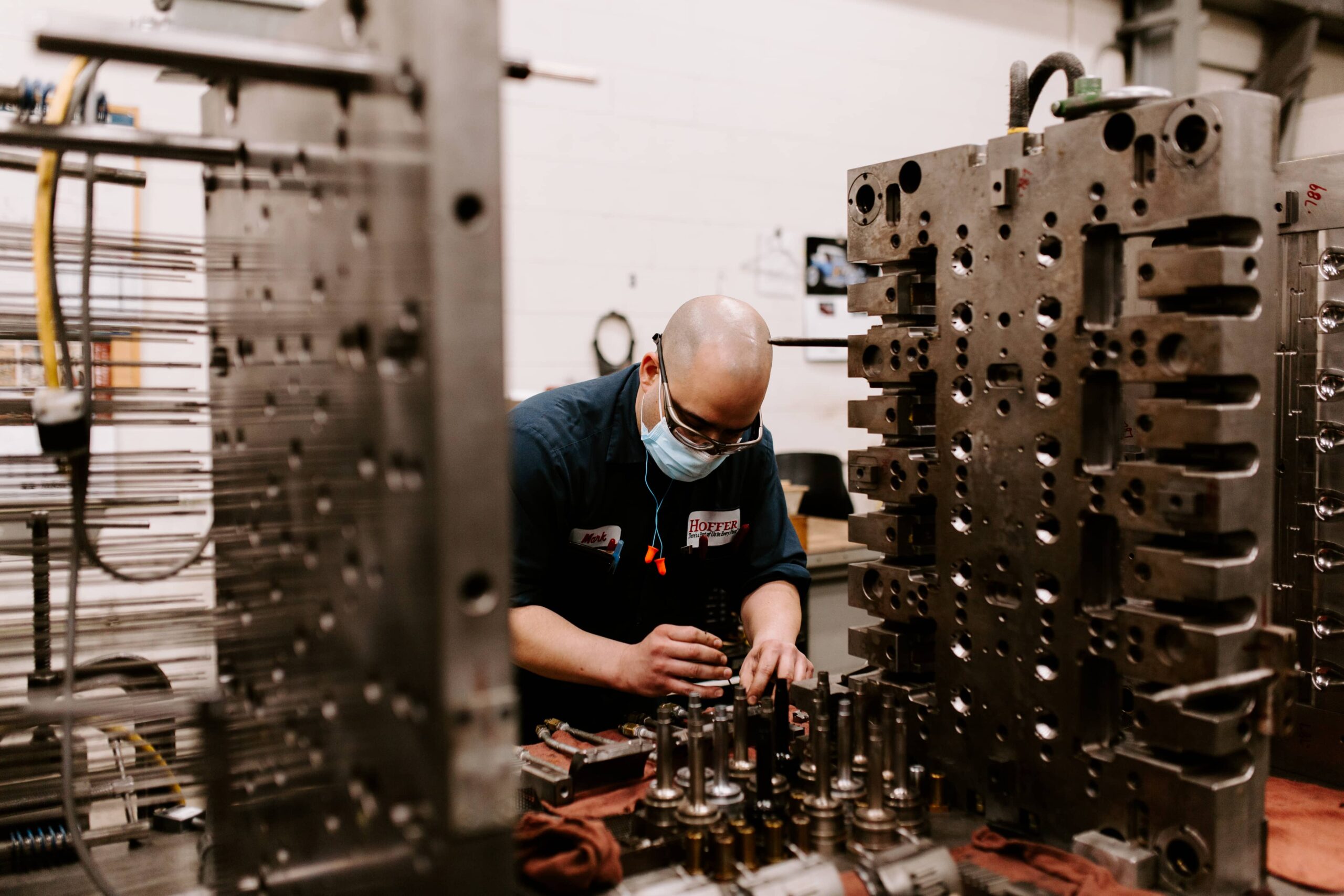
Once molds are in operation, Hoffer’s experienced tooling team keeps them performing at peak efficiency. Whether tools come to us as new builds or as part of a tool transfer program, we are committed to repairing and maintaining tools to drive the highest standards of quality.
Regular inspections, cleaning, precision repairs and detailed component checks prevent premature wear, reduce downtime and sustain quality across millions of cycles. Many Hoffer-maintained molds run well beyond the industry average of one to two million cycles, often exceeding by millions. This long-term reliability protects customer investments and ensures uninterrupted, high-quality production.
FAQs About Tooling
Tooling refers to the molds, fixtures, gauges, and robotic end-of-arm tooling (EOAT) used to manufacture and verify plastic parts. High-quality tooling ensures every component is formed accurately, consistently and to specification.
Tooling in manufacturing is the custom equipment that enables repeatable, precise production. It defines part geometry, flow, cooling and handling, making it essential for producing plastic components that meet tight tolerance and performance standards.
Rapid tooling uses accelerated methods and materials – often aluminum or hybrid steels – to get parts quickly for prototypes, bridge runs or early validation. It reduces lead time and cost while allowing engineers to test part performance before full-scale production.
Soft tooling relies on aluminum or pre-hardened steels for lower volumes and faster change. While it offers speed and lower cost, it has a shorter lifespan than hardened steel tools used for long-term, high-volume production.
A tooling engineer designs and develops molds and related equipment used in manufacturing. They balance part geometry, resin behavior, processing conditions and cost to achieve reliable, scalable production and long mold life.
Tooling is important in injection molding because it defines the shape, function and quality of every part produced. Well-designed tooling ensures consistent dimensions, stable cycle times, minimal defects and efficient automated handling through production.
The difference between tooling and molds is scope. Molds are the precision cavities that shape molten plastic into parts, while tooling refers to the entire system required to build, run and maintain production, including molds inserts, fixtures and automation components.
Hoffer Plastics manages tooling production through close collaboration with qualified tooling partners. Our engineers oversee every stage from design and DFM through build, validation and maintenance. Our focus is on ensuring every mold meets your performance, quality and delivery standards.
Preventative maintenance is required for tooling to maintain dimensional accuracy, surface quality and consistent performance over time. Regular cleaning, polishing and component replacement prevent wear, corrosion and buildup that can cause flash, parting line damage or dimensional drift. At Hoffer Plastics, proactive maintenance extends tool life, reduces downtime and ensures reliable production across tens of millions of cycles.
Why Hoffer Plastics for Tooling
With more than 70 years of injection molding experience and a proven 99.45% on-time delivery rate, Hoffer Plastics combines deep engineering expertise with disciplined program management to ensure every tool performs flawlessly. As a third-generation family owned manufacturer, we’ve built our reputation on precision, consistency and long-term partnerships that drive measurable performance for global brands.
- Design for Manufacturability (DFM) to derisk geometry, wall, draft and gating optimization before steel is cut.
- Tooling strategy matched to program volume and lifecycle, including rapid, bridge and production tools.
- Scientific molding and validation that delivers defined processing windows and data-driven qualification to drive repeatable part quality and stable cycles.
- Automation-Ready tooling with End-of-arm tooling (EOAT), vision inspection and welding integration to drive higher throughput.
- Proactive maintenance and spare strategy to maximize uptime, extend mold life well beyond industry norms and protect your tooling investment.
- Transparent program management from concept through sustained production with documentation, traceability and accuracy.
Ready to Discuss a Tooling Strategy for Your Next Program?
From transfer programs to new product launches, Hoffer helps manufacturers reduce risk, extend tool life and get to market faster. Share your part files, resin requirements, production volumes and timeline to start building the right tooling strategy for your program.
Ready to launch a consumer product?
"*" indicates required fields