Moldmaking

Moldmaking

Moldmaking

Precision moldmaking that launches programs faster and runs reliably for years.


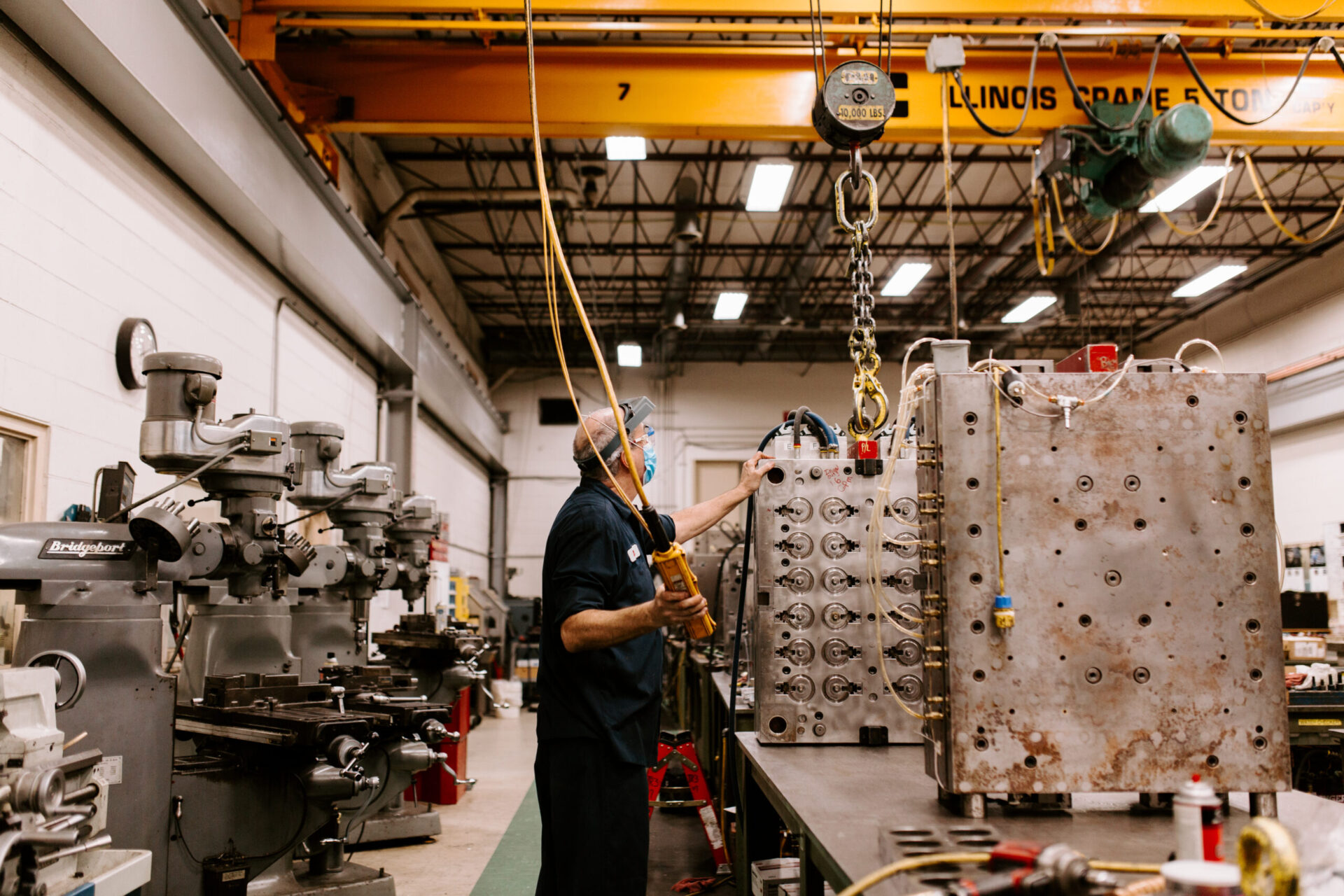
At Hoffer Plastics, moldmaking is an engineering-driven discipline built on precision, collaboration and decades of expertise. With 27 skilled moldmakers on-staff, Hoffer oversees every stage of the mold lifecycle from design input through optimization and ongoing performance management. Our team restores molds to peak condition through proactive maintenance and continuous improvement.

We offer technical expertise that extends tool life and improves manufacturing performance and quality to deliver repeatability, optimized cycle times and reduced total cost of ownership. Backed by deep tooling knowledge and hands-on production experience, we manage every stage of the tooling process to support molds that consistently perform above industry standards.

MoldMaking: An Introduction

What Moldmaking is and its Role in Modern Manufacturing

Moldmaking brings together engineering precision, craftsmanship and collaboration. It is the design and construction of injection molds, inserts and related tooling that form plastic parts. The mold defines geometry, surface finish and throughput, making it the foundation of quality and unit cost.

Hoffer’s experienced engineering and tooling teams work closely to deliver excellence in moldmaking, ensuring every mold supports manufacturability, dimensional stability and efficiency over its entire lifecycle. Each mold reflects our deep understanding of processing requirements, ensuring reliable production, consistent part quality and long-term performance.

Importance of Precision and Technology in Moldmaking

Precision and technology are at the core of effective moldmaking. Tight tolerances, balanced flow, optimized cooling and robust ejection determine dimensional stability, surface finish, cycle time and uptime. Through advanced computer-aided design (CAD), computer-aided manufacturing (CAM), simulation and automated machining, Hoffer achieves the accuracy and repeatability that modern manufacturing demands. Our proactive, data-driven approach ensures every mold is built to perform, delivering efficiency and longevity well beyond industry expectations.

Moldmaking Technology

Evolution Over the Years
Moldmaking has evolved from manual machining to a highly automated, data-driven process. Today’s tools are built using computer numerical control (CNC), electrical discharge machining (EDM) and high-speed milling to deliver complex geometries and tighter lead times. Moldmakers apply these technologies strategically, combining proven craftsmanship with modern digital systems to ensure consistent precision, speed and reliability.
How Digital Tools, CAD and CAM Shape Modern Moldmaking
At Hoffer, digital integration drives every step of mold development and support. Our engineers use CAD and CAM systems for draft analysis, wall-uniformity checks and toolpath accuracy, while flow, cooling and warp simulations guide gating and runner design. This insight enables smarter decisions before steel is cut, reducing risk and ensuring molds are optimized for high-volume automated production.
The Impact of Automation and Robotics
Automation and robotics have elevated what’s possible in moldmaking. Technologies like robotic loading, unloading and in-process probing increase throughput and repeatability while reducing variation and lead time. Automated inspection and standardized fixtures allow for lights-out machining and consistent mold quality. These systems help moldmakers focus on precision, process control and performance, ensuring every tool is ready to run with stability and speed.

Precision Moldmaking

Precision defines Hoffer Plastics’ approach to moldmaking. Every tool is engineered and maintained to achieve dimensional accuracy, repeatability and stability across its full lifecycle.

Why it’s Essential for all Industries

Precision moldmaking is vital across industries such as medical, automotive, aerospace and packaging. These sectors depend on molds that produce consistent, validated parts within tight process windows. Hoffer’s engineering expertise ensures that every tool meets exacting quality standards, supports stable processing and maintains cosmetic integrity over years of production.

Methods to Achieve Accuracy

  • Design for Manufacturability (DFM) with early identification of critical-to-function features.
  • Steel and coating selection (e.g., P20, H13, 420SS) optimized for wear resistance, resin behavior and production volume.
  • Hot runners, valve gates, lifters, slides, venting and conformal cooling applied where performance gains are proven.
  • In-process probing, coordinate measuring machine (CMM) verification and cavity balance checks to validate accuracy and performance.

Many molds managed by Hoffer Plastics remain in service for millions of cycles beyond industry norms, with some performing reliably for more than 25 years. It’s a testament to the precision, maintenance discipline and craftsmanship that define every Hoffer project.

Common Challenges and Solutions

Accuracy and precision is critical in moldmaking to avoid waste and risk due to defective parts. Common challenges – and their solutions – include:

  • Warp and sink: Solutions include uniform walls, ribs, controlled packing and optimized cooling.
  • Weld lines and air traps: Overcome by gate and vent relocation and flow balancing.
  • Flash and wear: Addressed through steel selection, shut-off geometry and rigorous preventative maintenance.

Moldmaking

Difference Between Moldmaking and Molding
Moldmaking creates the tooling, while molding uses that tool to form parts. In plastic injection molding, the tool defines geometry, dimensional control and cosmetic quality, making it the cornerstone of performance.
How Moldmaking Supports Plastic Molding and Prototyping
Hoffer applies specialized tooling strategies to support a wide range of plastic injection molding applications. From prototype and bridge tooling to full production molds, each tool is engineered to optimize resin flow, cooling, part geometry and production efficiency. Our deep knowledge of tooling design and processing ensures every mold is aligned to its intended application, volume and performance requirements with precision and consistency.
Applications Across Industries
From packaging components and medical devices to consumer, automotive and industrial components, Hoffer Plastics supports a wide range of applications. Our focus remains on efficiency, durability and sustained quality across every production environment.

Robotics & Machinery in Moldmaking

Moldmaking Machinery

Hoffer’s 27 moldmakers operate with advanced equipment that supports precision and flexibility, including:

  • 3 axis CNC for complex geometries and critical surfaces.
  • Sinker EDM for sharp corners, deep features and hardened steels.
  • Surface and profile grinding for precision plates, shut-offs and alignment.

Through integrated probing and lights-out machining, Hoffer delivers consistent accuracy and throughput across all mold programs, ensuring the highest level of craftsmanship and reliability.

Moldmaking Technologies

Emerging Technologies Shaping the Future

Hoffer continues to advance moldmaking through innovation and collaboration. We leverage technologies such as additive and subtractive hybrid machining, sensorized molds for process monitoring, and digital twins for predictive maintenance and faster repair cycles. These capabilities drive higher precision, shorter lead times and greater reliability.

Additive Manufacturing and Hybrid Solutions
Additive manufacturing enables conformal cooling and rapid prototyping for inserts and components that traditional machining cannot achieve. By combining additive and subtractive processes, Hoffer enhances cooling performance, reduces cycle time and minimizes part warpage in heat-sensitive applications.
Sustainable and Energy-Efficient Approaches
Sustainability is a cornerstone of Hoffer’s moldmaking philosophy. Every mold is engineered with longevity and efficiency in mind using optimized cooling designs that improve thermal control and reduce energy demand. Durable steels and precision maintenance practices extend tool life, minimize waste and ensure consistent performance over millions of cycles. This commitment to responsible engineering reflects Hoffer’s belief that sustainability and performance go hand in hand, delivering lasting value for our customers and a smaller footprint for the planet.

FAQs on Moldmaking

What is moldmaking in manufacturing?

Moldmaking in manufacturing is the process of designing and creating molds or tooling used to form plastic parts. Each mold defines the geometry, flow, cooling and ejection that determine part quality, dimensional accuracy and production efficiency.

What materials are used for moldmaking?

Materials used for moldmaking include tool steels such as P20, H13 and 420SS. Material selection depends on part volume, resin abrasiveness and cosmetic or dimensional requirements.

How does precision moldmaking improve product quality?

Precision moldmaking improves product quality by stabilizing dimensions, surface finish and cycle times. This accuracy minimizes scrap, reduces rework and increases first-pass yield, resulting in more consistent, high-performing injection molded parts.

What makes Hoffer Plastics’ approach to moldmaking unique?

Hoffer Plastics’ approach to moldmaking is unique because our engineering team supports every stage – from DFM and design input through validation – to ensure precision, quality and timing. This collaborative, data-driven process delivers scalable, high-volume performance.

How does Hoffer ensure long mold life and consistent performance?

Hoffer ensures long mold life and consistent performance through preventative maintenance, precision repairs and rigorous validation. We also strategically partner with experienced tool builders to bring designs to life, ensuring alignment with Hoffer’s rigorous production standards. Many tools run efficiently for millions of cycles, with some running lasting more than 25 years while maintaining consistent quality.

How does Hoffer collaborate with customers during the moldmaking process?

Hoffer collaborates with customers during the moldmaking process from early design and DFM through validation and full production. These close partnerships ensure each mold meets performance goals, cost targets and long-term manufacturing expectations and needs.

How long do molds under Hoffer’s care typically last?

Molds under Hoffer’s care typically last for millions of cycles, with some exceeding 33 million while maintaining consistent part quality and uptime. This is achieved through rigorous, proactive mold maintenance programs that ensure all molds run like new to meet quality, efficiency and sustainability goals.

What is the difference between molds, molding, tools and tooling?

The difference between molds, molding, tools and tooling comes down to function.

  • Molds are the precision-made cavities that shape molten plastic into parts.
  • Molding is the manufacturing process that uses those molds to produce parts.
  • Tools generally refer to the physical molds or inserts themselves. Often used interchangeably with molds. 
  • Tooling is the broader process of designing, engineering, building and maintaining those tools to ensure high-quality production. Also used interchangeably with molds and tools.

At Hoffer Plastics, our engineering and tooling teams work together from design through validation to make sure every mold and tool performs reliably throughout its lifecycle.

Why Hoffer Plastics for Moldmaking

Customers trust Hoffer Plastics for our deep engineering insight, responsive partnership and unmatched mold performance. With 27 on-site toolmakers, three dedicated toolrooms and more than 70 years of manufacturing expertise, we approach every program with a focus on precision, reliability and long-term results.

By implementing a rigorous, proactive maintenance program, Hoffer’s moldmaking experts consistently extend tool life well beyond industry standards, with some molds lasting up to 30 million cycles. This disciplined approach optimizes every mold for peak performance, maximizing uptime and achieving exceptional longevity, with several molds still running under Hoffer’s care after more than 25 years in production.

  • Engineering-led collaboration to ensure every mold is optimized for production speed, quality and consistency.
  • Advanced tooling expertise to drive decisions for hot runners, conformal cooling and gating optimization.
  • Validation and sampling processes to give customers confidence their tools are designed for high-volume, high-quality output.
  • Sustainability integrated into every mold. Hoffer engineers with purpose, extending tool life, improving energy efficiency and supporting responsible manufacturing that benefits both our customers and the environment.
  • Proven lifecycle management through proactive preventative maintenance programs that extend tool life significantly.

From first interaction through decades of reliable performance, Hoffer Plastics delivers a moldmaking partnership defined by trust, precision and proven results.

Ready to plan a moldmaking strategy?
Share CAD, target resin, estimated annual volume (EAV), cosmetic class and timeline. We’ll recommend steel, cavitation, runner/cooling strategy and a validation plan aligned to your goals.

Ready to launch a consumer product?

Share CAD, target resin and color, critical dimensions and tolerances, expected annual volume (EAV), cosmetic class and packaging specs. We’ll return a practical plan – tooling path, process window, CMF approach and validation steps – to reach stable production quickly.

"*" indicates required fields